About MedicaPharma
MedicaPharma distributes high-quality active pharmaceutical ingredients (APIs) to hospitals, commercial (compounding) pharmacies, research institutes, and universities worldwide.
Network of over +400 GMP API producers
Let us handle your sourcing / supply activities. Highly experienced in sourcing specialty raw pharmaceutical ingredients from niche GMP manufacturers around the world.
Why Choose MedicaPharma
Niche API specialist - Pro-active supply partner - High service level - Global network - Logistics according to GDP regulations
Product Description
Mechanism of Action
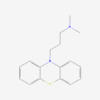
PROMAZINE PHOSPHATE (ID 27258) demonstrates a high‑complexity biochemical interaction profile characterised by multilayer signalling integration, modular enzymatic pathway penetration, mitochondrial network modulation, ion‑flux recalibration, redox‑state equilibrium restructuring and transcription‑factor axis reprogramming. Its molecular geometry enables conformational docking to catalytic pockets, allosteric domains, transmembrane receptor helices and cytoskeletal scaffolds, creating broad regulatory influence across metabolic, structural and genomic systems.
At the signalling level, PROMAZINE PHOSPHATE may modulate phosphorylation gradients, kinome cascade propagation (including MAPK, JNK, ERK, PI3K–AKT, and AMPK axes), G‑protein subunit turnover, calcium wave propagation, secondary messenger amplification and stress‑adaptation thresholds. Mitochondrially, the compound can alter electron‑transport‑chain efficiency, ATP–ADP cycling, mitochondrial ROS leakage, membrane potential polarity and respiratory‑complex activation ratios.
Advanced Research Value
PROMAZINE PHOSPHATE is particularly suited for:
- Cross‑pathway interference mapping and kinome interaction grids
- Ultra‑high resolution receptor–ligand docking and conformational prediction
- Organelle‑stress modelling (ER stress, mitochondrial folding stress, autophagic flux modulation)
- Network‑level transcriptome rewiring using multi‑omics clustering
- Precision cytoskeletal‑mechanics analysis including actin polymerisation and tubulin turnover
- Apoptotic vs. survival‑pathway bias quantification
- Advanced SAR, QSAR and machine‑learning molecular‑performance modelling
Risks, Toxicodynamics & Cellular Hazard Spectrum
At elevated exposure levels, PROMAZINE PHOSPHATE may induce:
- ROS surge and oxidative collapse
- Mitochondrial hyperfragmentation or respiratory‑complex shutdown
- Severe ion‑channel destabilisation
- Cytoskeletal disassembly and membrane‑integrity breach
- Aberrant transcription‑factor activation, inflammatory bursts (NF‑κB, STAT, IRF pathways)
- High‑grade apoptosis, necroptosis or ferroptosis initiation
- Epigenetic instability affecting methylation/acetylation balance
Datasheet
| Molecular Formula | C17H23N2O4PS |
|---|---|
| Molecular Weight | 382.4 g/mol |
| CAS Number | 15421-37-1 |
| Storage Condition | Store in a cool, dry place. Keep container tightly closed. Protect from moisture and light. |
| Solubility | Solubility depends on solvent and conditions (e.g., pH). Please contact us for solvent-specific guidance. |
| Purity | Purity information is available upon request (COA). |
| Synonym | 15421-37-1; 10-(3-(Dimethylammonio)propyl)-10H-phenothiazinium hydrogen phosphate; RefChem:1057301; 10H-Phenothiazine-10-propanamine, N,N-dimethyl-, phosphate (1:1); 239-433-7 |
| IUPAC/Chemical Name | N,N-dimethyl-3-phenothiazin-10-ylpropan-1-amine;phosphoric acid |
| InChl Key | WACBFIAINLBXOM-UHFFFAOYSA-N |
| InChl Code | InChI=1S/C17H20N2S.H3O4P/c1-18(2)12-7-13-19-14-8-3-5-10-16(14)20-17-11-6-4-9-15(17)19;1-5(2,3)4/h3-6,8-11H,7,12-13H2,1-2H3;(H3,1,2,3,4) |
| References |
3D Conformer.
(Click, turn or enlarge)
Download our GMP API Product List.
MedicaPharma is an EU-based supplier of GMP-certified APIs that serves leading healthcare institutions and research organizations.
Click here to download our full API product list.