About MedicaPharma
MedicaPharma distributes high-quality active pharmaceutical ingredients (APIs) to hospitals, commercial (compounding) pharmacies, research institutes, and universities worldwide.
Network of over +400 GMP API producers
Let us handle your sourcing / supply activities. Highly experienced in sourcing specialty raw pharmaceutical ingredients from niche GMP manufacturers around the world.
Why Choose MedicaPharma
Niche API specialist - Pro-active supply partner - High service level - Global network - Logistics according to GDP regulations
Product Description
Mechanism of Action
PANCURONIUM BROMIDE (ID 27015) exhibits a multidimensional biochemical activity profile involving modulation of enzyme-catalyzed pathways, receptor-mediated intracellular signaling, ion-channel regulation, mitochondrial bioenergetics, oxidative-stress balancing, membrane dynamics, and transcription-factor orchestration. Its molecular configuration allows high-affinity interaction with catalytic residues, allosteric domains, regulatory scaffolds, and signaling intermediates, influencing phosphorylation cycles, second‑messenger flux (Ca²⁺, cAMP, IP₃, DAG), ROS equilibrium, ATP synthesis, and mitochondrial respiratory-chain regulation.
Depending on dose, exposure duration, and cell type, PANCURONIUM BROMIDE can modify chromatin accessibility, metabolic flux routing, vesicular trafficking, cytoskeletal structure, and gene-expression clusters associated with survival, inflammation, apoptosis, autophagy, and metabolic adaptation.
Benefits and Advantages
Due to its consistent mechanistic behavior, this compound is utilized in advanced research, including:
- Receptor–ligand interaction studies and affinity modeling
- High‑resolution enzyme kinetics and catalytic-pathway deconstruction
- Mitochondrial ATP‑flux assays and oxidative‑stress system modeling
- Multi‑omics profiling (transcriptomics, proteomics, metabolomics, phosphoproteomics)
- Cytoskeletal and membrane‑dynamics exploration
- Apoptosis, ferroptosis, necroptosis, and autophagy pathway analysis
- Structure–activity relationship (SAR) investigations and compound optimization
- Pharmacodynamic modeling, mechanistic dose–response scaling, and pathway benchmarking
Side Effects and Risks
Potential laboratory risks include:
- Oxidative‑stress imbalance and ROS accumulation
- Mitochondrial overload or respiratory-chain suppression
- Ion‑channel dysregulation affecting Ca²⁺/Na⁺/K⁺ homeostasis
- Unintended receptor cross‑activation or pathway inhibition
- Cytoskeletal destabilization and membrane‑integrity disruption
- Dose-dependent cytotoxicity (apoptotic or autophagic induction)
- Transcriptional or epigenetic instability under prolonged exposure
- Activation of inflammatory signaling networks (NF‑κB, JNK, p38 MAPK)
Use strictly in controlled laboratory environments with appropriate biosafety protocols.
Datasheet
| Molecular Formula | C35H60Br2N2O4 |
|---|---|
| Molecular Weight | 732.7 g/mol |
| CAS Number | 15500-66-0 |
| Storage Condition | Pancuronium bromide should be stored under refrigeration at 2-8 °C. |
| Solubility | 1 g sol in 30 parts chloroform, 1 part water (20 °C) |
| Purity | Purity information is available upon request (COA). |
| Synonym | PANCURONIUM BROMIDE; 15500-66-0; Pancuronium dibromide; Mioblock; Bromuro de pancuronio |
| IUPAC/Chemical Name | [(2S,3S,5S,8R,9S,10S,13S,14S,16S,17R)-17-acetyloxy-10,13-dimethyl-2,16-bis(1-methylpiperidin-1-ium-1-yl)-2,3,4,5,6,7,8,9,11,12,14,15,16,17-tetradecahydro-1H-cyclopenta[a]phenanthren-3-yl] acetate dibromide |
| InChl Key | NPIJXCQZLFKBMV-YTGGZNJNSA-L |
| InChl Code | InChI=1S/C35H60N2O4.2BrH/c1-24(38)40-32-21-26-13-14-27-28(35(26,4)23-31(32)37(6)19-11-8-12-20-37)15-16-34(3)29(27)22-30(33(34)41-25(2)39)36(5)17-9-7-10-18-36;;/h26-33H,7-23H2,1-6H3;2*1H/q+2;;/p-2/t26-,27+,28-,29-,30-,31-,32-,33-,34-,35-;;/m0../s1 |
| References |
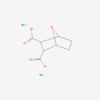
3D Conformer.
(Click, turn or enlarge)
Download our GMP API Product List.
MedicaPharma is an EU-based supplier of GMP-certified APIs that serves leading healthcare institutions and research organizations.
Click here to download our full API product list.