AMOBARBITAL
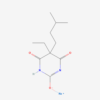
Amobarbital is a research-grade compound used in advanced pharmaceutical and biochemical studies. Chemical & Pharmacological Characteristics Amobarbital is relatively lipophilic and can achieve central exposure in biological systems. It exhibits a classic barbiturate pharmacodynamic profile with dose-dependent sedation and narrow safety margins at high exposure. Depending on jurisdiction, it may be regulated as a controlled substance, impacting procurement and storage. It is primarily applied to investigate compound-specific mechanisms, physicochemical behavior, and analytical or formulation-relevant characteristics under controlled laboratory conditions. Only GMP materials will be supplied, logistics all according to GDP.
About MedicaPharma
MedicaPharma distributes high-quality active pharmaceutical ingredients (APIs) to hospitals, commercial (compounding) pharmacies, research institutes, and universities worldwide.
Network of over +400 GMP API producers
Let us handle your sourcing / supply activities. Highly experienced in sourcing specialty raw pharmaceutical ingredients from niche GMP manufacturers around the world.
Why Choose MedicaPharma
Niche API specialist - Pro-active supply partner - High service level - Global network - Logistics according to GDP regulations
Product Description
Chemical & Pharmacological Characteristics
Amobarbital is relatively lipophilic and can achieve central exposure in biological systems. It exhibits a classic barbiturate pharmacodynamic profile with dose-dependent sedation and narrow safety margins at high exposure. Depending on jurisdiction, it may be regulated as a controlled substance, impacting procurement and storage.
Mechanism of Action
Amobarbital acts as a positive allosteric modulator of GABAA receptors, enhancing inhibitory neurotransmission by increasing chloride conductance and prolonging channel opening when GABA is present. This shifts neuronal network activity toward reduced firing probability and lower excitatory drive.
At higher exposures, barbiturates can produce broader CNS suppression, including depression of brainstem respiratory centers and interference with arousal circuitry. These effects make amobarbital useful for mechanistic studies but require careful monitoring in vivo and conservative concentration selection in vitro.
Advanced
- GABAergic receptor pharmacology and inhibitory signaling mechanism studies
- CNS safety pharmacology panels (sedation, coordination, respiratory endpoints)
- Benchmarking of sedative-hypnotic liability during lead optimization
- Network-level electrophysiology studies of inhibition-excitation balance
- Comparative profiling versus benzodiazepines and other CNS depressants
Toxicodynamics & Cellular Hazard Spectrum
- Profound sedation and respiratory depression at high exposure (life-threatening in vivo)
- Tolerance and dependence phenomena with repeated dosing in biological systems
- Motor impairment and cognitive suppression affecting behavioral endpoints
- Controlled substance handling and secure storage requirements may apply
- Potential assay confounding via global CNS suppression; interpret endpoints carefully
Only GMP materials will be supplied, logistics all according to GDP.
Datasheet
| Molecular Formula | C11H18N2O3 |
|---|---|
| Molecular Weight | 226.27 g/mol |
| CAS Number | 57-43-2 |
| Storage Condition | Store in tight container as defined in the USP-NF. This material should be handled and stored per label instructions to ensure product integrity. |
| Solubility | less than 1 mg/mL at 65.3 °F (NTP, 1992) |
| Purity | Purity information is available upon request (COA). |
| Synonym | amobarbital; Amylobarbitone; Isomytal; Amylobarbital; Barbamil |
| IUPAC/Chemical Name | 5-ethyl-5-(3-methylbutyl)-1,3-diazinane-2,4,6-trione |
| InChl Key | VIROVYVQCGLCII-UHFFFAOYSA-N |
| InChl Code | InChI=1S/C11H18N2O3/c1-4-11(6-5-7(2)3)8(14)12-10(16)13-9(11)15/h7H,4-6H2,1-3H3,(H2,12,13,14,15,16) |
| References | https://pubchem.ncbi.nlm.nih.gov/compound/2164; small-molecule |
3D Conformer.
(Click, turn or enlarge)
Download our GMP API Product List.
MedicaPharma is an EU-based supplier of GMP-certified APIs that serves leading healthcare institutions and research organizations.
Click here to download our full API product list.