AMMONIUM PHTALAMATE
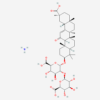
Ammonium Phtalamate is a research-grade compound used in advanced pharmaceutical and biochemical studies. Chemical & Pharmacological Characteristics In aqueous systems the compound dissociates into ammonium and phthalamate ions, with solution behavior governed by acid-base equilibria and ionic strength. It is generally stable under standard storage when protected from excess moisture. Because counterion chemistry drives most properties, documentation of buffer composition and pH is important for reproducibility. It is primarily applied to investigate compound-specific mechanisms, physicochemical behavior, and analytical or formulation-relevant characteristics under controlled laboratory conditions. Only GMP materials will be supplied, logistics all according to GDP.
About MedicaPharma
MedicaPharma distributes high-quality active pharmaceutical ingredients (APIs) to hospitals, commercial (compounding) pharmacies, research institutes, and universities worldwide.
Network of over +400 GMP API producers
Let us handle your sourcing / supply activities. Highly experienced in sourcing specialty raw pharmaceutical ingredients from niche GMP manufacturers around the world.
Why Choose MedicaPharma
Niche API specialist - Pro-active supply partner - High service level - Global network - Logistics according to GDP regulations
Product Description
Chemical & Pharmacological Characteristics
In aqueous systems the compound dissociates into ammonium and phthalamate ions, with solution behavior governed by acid-base equilibria and ionic strength. It is generally stable under standard storage when protected from excess moisture. Because counterion chemistry drives most properties, documentation of buffer composition and pH is important for reproducibility.
Mechanism of Action
No receptor-mediated pharmacology is expected. Any apparent biological activity is typically nonspecific, arising from changes in buffering capacity, local pH, or osmolarity-factors that can influence enzyme kinetics, membrane potential, and stress responses in cell-based assays.
In method development, ammonium phthalamate can serve as a comparator for other ammonium salts to disentangle counterion effects from ammonium-driven acidifying behavior, particularly in solubility, precipitation, or compatibility workflows.
Advanced
- Analytical method development and calibration for organic acid salt systems
- Salt-screening and counterion compatibility studies in formulation research
- Stability and precipitation mapping across pH/ionic strength conditions
- Comparator material for buffering and osmolarity control experiments
- Synthetic chemistry workflows where phthalamate salts are intermediates
Toxicodynamics & Cellular Hazard Spectrum
- Low intrinsic hazard in routine laboratory use; treat as chemical irritant
- Nonspecific cytotoxicity possible at high concentration (osmotic/pH stress)
- Potential assay shifts in pH-sensitive or ionic-strength-sensitive readouts
- Dust exposure irritation; standard PPE and ventilation recommended
- Dispose according to local rules for organic salts and laboratory reagents
Only GMP materials will be supplied, logistics all according to GDP.
Datasheet
| Molecular Formula | C8H12N2O4 |
|---|---|
| Molecular Weight | 200.19 g/mol |
| CAS Number | 523-24-0 |
| Storage Condition | Store in a cool, dry place. Keep container tightly closed. Protect from moisture and light. |
| Solubility | Solubility depends on solvent and conditions (e.g., pH). Please contact us for solvent-specific guidance. |
| Purity | Purity information is available upon request (COA). |
| Synonym | azane;phthalic acid; Phthalic acid diammonia salt; SCHEMBL533818; SCHEMBL533819; DTXSID40966671 |
| IUPAC/Chemical Name | azane;phthalic acid |
| InChl Key | CHCFOMQHQIQBLZ-UHFFFAOYSA-N |
| InChl Code | InChI=1S/C8H6O4.2H3N/c9-7(10)5-3-1-2-4-6(5)8(11)12;;/h1-4H,(H,9,10)(H,11,12);2*1H3 |
| References | small-molecule |
3D Conformer.
(Click, turn or enlarge)
Download our GMP API Product List.
MedicaPharma is an EU-based supplier of GMP-certified APIs that serves leading healthcare institutions and research organizations.
Click here to download our full API product list.