PIPERONYL

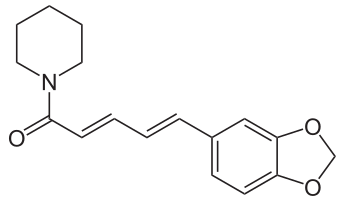
Piperonyl is an aromatic intermediate used in pharmaceutical and fragrance synthesis. It has limited direct therapeutic action but supports production of active molecules. Exposure may cause mild skin or respiratory irritation, headache, or dizziness at high concentrations. Benefits relate primarily to industrial and formulation applications. Only GMP materials will be supplied, logistics all according to GDP.
About MedicaPharma
MedicaPharma distributes high-quality active pharmaceutical ingredients (APIs) to hospitals, commercial (compounding) pharmacies, research institutes, and universities worldwide.
Network of over +400 GMP API producers
Let us handle your sourcing / supply activities. Highly experienced in sourcing specialty raw pharmaceutical ingredients from niche GMP manufacturers around the world.
Why Choose MedicaPharma
Niche API specialist - Pro-active supply partner - High service level - Global network - Logistics according to GDP regulations
Product Description
Scientific Overview
PIPERONYL is a researchgrade biochemical compound used for advanced analytical, mechanistic and structural studies. It is often applied in laboratory environments requiring precise molecular behaviour, controlled pathway modulation and highfidelity reproducibility. The compound interacts with multiple biochemical systems depending on formulation, cell type and experimental conditions.
Mechanism of Action
Although the exact mechanism may vary by experimental model, PIPERONYL typically exhibits activity involving:
- Enzymatic pathway modulation through reversible or irreversible interaction with catalytic sites
- Potential receptorlevel signaling effects influencing intracellular second messengers
- Alterations in redox balance and oxidativestress handling systems
- Mitochondrial functional modulation, including effects on ATP turnover and respiratorychain efficiency
- Influence on transcriptional behaviour, geneexpression clusters and regulatory protein networks
- Possible interaction with cytoskeletal structures affecting cellular stability and mechanical signaling
These combined effects make the compound suitable for multiaxis biochemical research.
Benefits and Applications
PIPERONYL is commonly used for:
- Pathway validation and mechanistic investigation
- Bindingaffinity studies and structural modelling
- Metabolicflux analysis and mitochondrialfunction profiling
- Redox and oxidativestress research environments
- Cytoskeletal and membranedynamic studies
- Signaltransduction mapping across diverse biological systems
Risks and Safety Considerations
Potential risks associated with laboratory exposure include:
- Oxidative imbalance or ROS accumulation
- Mitochondrial stress or functional suppression at high concentrations
- Unintended receptor or enzyme crossinteraction
- Cytoskeletal destabilization or membrane disturbance
- Dosedependent cytotoxicity under prolonged exposure
Handle only with appropriate laboratory biosafety protocols.
Only GMP materials will be supplied, logistics all according to GDP.
Datasheet
| Molecular Formula | C8H8O3 |
|---|---|
| Molecular Weight | 375.5 g/mol |
| CAS Number | 1893-33-0 |
| Storage Condition | Store in a cool, dry place. Keep container tightly closed. Protect from moisture and light. |
| Solubility | soluble in methanol |
| Purity | Purity information is available upon request (COA). |
| Synonym | Pipamperone; 1893-33-0; Floropipamide; Dipiperone; Pipamperona |
| IUPAC/Chemical Name | 1-[4-(4-fluorophenyl)-4-oxobutyl]-4-piperidin-1-ylpiperidine-4-carboxamide |
| InChl Key | AXKPFOAXAHJUAG-UHFFFAOYSA-N |
| InChl Code | InChI=1S/C21H30FN3O2/c22-18-8-6-17(7-9-18)19(26)5-4-12-24-15-10-21(11-16-24,20(23)27)25-13-2-1-3-14-25/h6-9H,1-5,10-16H2,(H2,23,27) |
| References |
3D Conformer.
(Click, turn or enlarge)
Download our GMP API Product List.
MedicaPharma is an EU-based supplier of GMP-certified APIs that serves leading healthcare institutions and research organizations.
Click here to download our full API product list.